I was asked to submit a story of my “journey to medical school” at Arkansas College of Health Education (ACHE) and Arkansas College of Osteopathic Medicine (ARCOM). I thought I’d share it here as well.
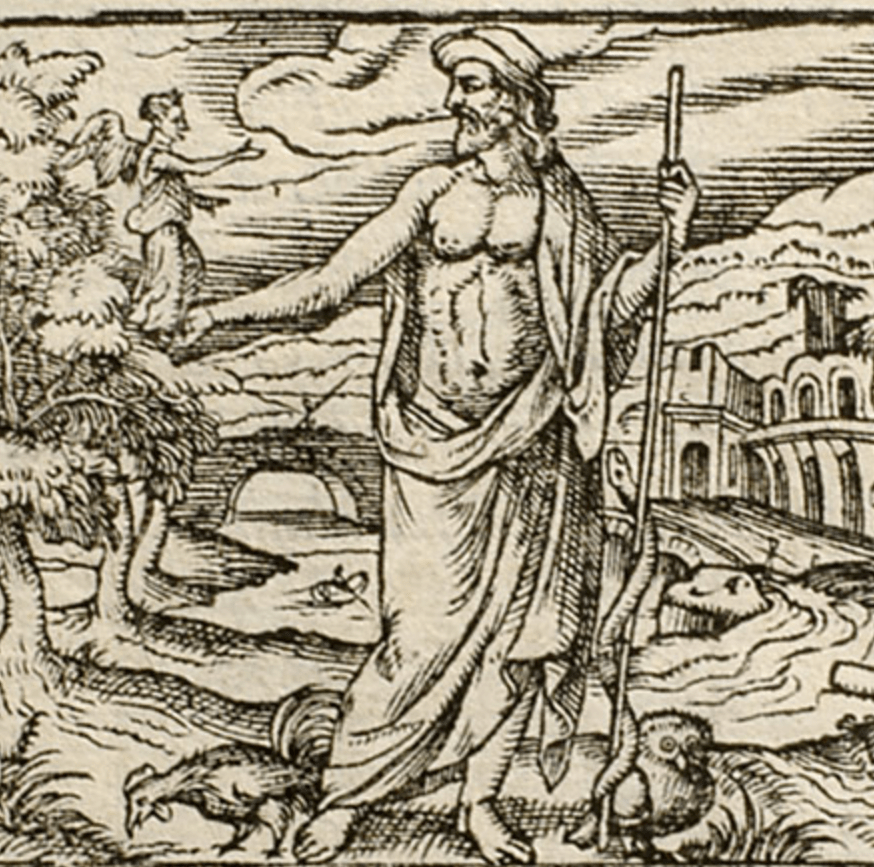
My path to medicine at ACHE is a bit of an odyssey—and I don’t use that literary allusion lightly. I am a nontraditional student; I’m probably more “nontraditional” than you’d even think when someone tells you she is a “nontraditional student”: I have a Ph.D. in English. Before medical school, I used to teach Homer’s Odyssey, among other things, to college students. In Homer’s poems, Odysseus is described as “polytropic,” which means “turning many ways, versatile; also, much travelled” (etymology from the Oxford English Dictionary). He is “the man of twists and turns…/ driven time and again off course” in Robert Fagles’ translation, a man who spends ten years fighting in the Trojan War, and then another ten years evading various disasters and temptations in his attempt to return to his home in Ithaca. I know you’re probably thinking that my use of analogy seems preposterous—but stay with me: I spent ten years earning my Ph.D. and teaching students throughout Southern California, culminating in my last teaching job in Shanghai, China during the pandemic. And by the end of medical school and residency, I will have spent another ten years becoming a DO.
Like Odysseus’ story, my journey to medicine is ultimately a journey back home—to Arkansas and to medicine. My hometown is Hot Springs, AR. My father is a plastic surgeon; he moved our family to Hot Springs when he retired from the Army and began working in private practice. I grew up understanding that my parents expected me to become a doctor—specifically an MD. My dad is an MD, his sister is an MD, my older brother is an MD. And I considered that path very seriously as I grew up. But to be honest with you now, as I struggled to be honest with myself then, I was never sure about that path. I knew becoming a doctor made sense both fiscally and ethically. I’d tell myself things like, “if these subjects in school come easily to you, why not become a doctor? Not everyone can do it and just think of how many people you can help.” But when I was truly frank with myself, I knew my heart wasn’t in it because the decision never felt like my own. I excelled in math and science classes, but I loved literature: I loved searching for meaning in characters and symbols; I loved finding what mattered to me through stories and conveying that significance to others. Unable to definitively decide between the sciences and the humanities, I hedged my bets by pursuing majors in both Biochemistry and English at Hendrix College—that is until my last semester of senior year when two classes conflicted with each other in my schedule. My first act of defiance was to drop the Biochem major and fully commit to the English degree. Meanwhile, I took the MCAT and was accepted into an MD school. On the outside, I appeared to be thriving, but inside I was really struggling. And my personal struggles coincided with the Great Recession, a time in which everyone else was struggling, too. Things felt desperate for me when I graduated in 2008, and I remember thinking, “Patients probably wouldn’t want their doctor to feel so ambivalent about being a doctor.” I knew I had to change something.
So, I started acting more rashly: just before graduation, I deferred entry to medical school and decided to move to New York City. Everyone thought I was crazy. My parents were so confused, they wouldn’t discuss the issue with me; my favorite STEM professor told the class I was deferring medical school to “work at McDonalds.” I felt so guilty and so low, but also so determined. In NYC, I worked as an office manager of a tech company and started applying to graduate programs in English. I eventually let my medical school acceptance lapse as I earned an MA in English in Virginia, then a PhD in English at USC in Los Angeles. I felt I was finally pursuing something I had chosen; I felt I was finding my true self. When I left Arkansas at 22 years old in 2008, I thought I would never go back—and I mean that in both a defiant way and in a sheepish way; a part of me thought my parents were so disappointed and angry they might not want me to come back.
When I look back on that time now, I have a lot of compassion for my younger self; but I’m also shocked by my ego and naivete. As I progressed in the field of academic humanities, I encountered problems I had not foreseen. The path I thought would save me was riddled with the disappointments and exploitations common to any job—but worse in a field that now depends nearly entirely on temporary adjunct labor. After so much work—many unpaid publications that in fact did not land me that interview, hundreds of rejected job applications, and years of underpaid temporary positions at multiple colleges, I had to reassess things. Why was I giving so much of myself to a field that did not value me? With the help of my spouse Billy, I began to reevaluate what I wanted in a career and what I felt I deserved. I found myself reconsidering the path I had turned away from years ago: “doctors are also teachers,” I thought; “they help their patients navigate the things that matter and decide what is most meaningful to them.” Moreover, turning to medicine would allow me to flex my STEM muscles in ways academic humanities did not. Such thoughts also made me reconsider my parents’ former hopes for me. Perhaps they weren’t only trying to control me—perhaps they knew more about the world than I did and were afraid for me.
Ten years after my first crossroads, I found myself at another one. And funnily enough, my personal struggles again coincided with another worldwide catastrophe: the Covid 19 pandemic. I spent early 2020 in lockdown in Los Angeles studying for the MCAT and re-assembling my medical school applications. I decided that I would only work in a humanities position now; I would no longer waste my energy trying to force that career to embrace me.
Perhaps because of this determination, an unexpected gift fell in my lap in summer 2020: I accepted what would be my last job in humanities academia, a position teaching Chinese Nationals at New York University in Shanghai. Because of the pandemic, Chinese students who were accepted as international students at NYU and other NYU branches around the world were prevented from obtaining visas to leave China; so, the Chinese government collaborated with various world governments to grant a handful of professors special privileges to come to NYU Shanghai instead. Because I was now at peace with my decision to put my energies into the medical field, I got to enjoy the experience in China more. I saw my time in Shanghai as a “victory lap” of sorts—I was paid better than I ever had been to travel to a place I never dreamed of going, and I got to teach mainstays of art and culture of the ancient world—including Homer’s Odyssey—to students eager to learn. I loved the fact that my interview for ARCOM occurred at 11 PM Shanghai time while I was locked in a hotel in central quarantine. I got to learn some Mandarin from a wonderful teacher, meet colleagues from all over the world, and bring Billy with me on an adventure when the lives of everyone we knew were on hold in the US—all of this while I had a spot at ARCOM waiting for me. I was so lucky that Osteopathic schools have a long history of embracing those who are a bit different, a bit non-traditional.
Now as a third-year osteopathic medical student, I look back at that time as one of naivety as well. I had no idea how difficult medical school would be. My path before ARCOM had been one of some small victories and many humbling defeats, but I had no idea what was coming. Trust me: medical school is not for the weak of spirit. I sometimes wonder if I would have been able to handle med school if I had chosen it when I first had the opportunity back in 2008. But one thing my indirect life path has taught me is that I am brave. I am capable of difficult things—of picking myself up when I fall and of reassessing what I thought I knew about the world and myself. Even more special, coming home to Arkansas and to medicine has helped me foster a better relationship with my parents, who are now retired and still living in Hot Springs—and it has brought me much hope for the future and my place in it.
Like Odysseus’s path home, my path to medicine is quite indirect; when I remember the twists and turns of the journey—how many times I thought I had things figured out and settled, and how many times the foundations I counted on got flipped around, leaving me floundering and searching for anything to hold on to—I have many ambivalent feelings. Sometimes I can’t help feeling distress and regret over the time I wasted and the people I let down. But at other times, I am overcome with gratitude for the many privileges and opportunities I’ve had. Like Odysseus in his story, I seem to be fueled by hard-headedness and ego, but also like him, I have been saved by learning from forced humility. And in this dichotomy, I feel a deep connection to the people around me. For what person isn’t struggling to make a place for him or herself in the world? And what is life for anyway, if not striving to feel gratitude during its highs and stay afloat during its lows?
I believe my journey to medicine is probably the story of my life; though it has been difficult for me, it has also made me who I am. I’m a journeyer and a student; and in medicine, I can always remain a journeyer and a student. As a doctor, I can travel alongside my patients, supporting them as they navigate their health challenges and opportunities. And in medicine I can remain a life-long student, learning from my patients and colleagues as we grapple with the unexpected paths life has in store for us. And as an osteopath, I am trained to consider my patients as whole persons, filled with stories not only about their present and past illnesses but also about the things that matter most to them.
My home is here: in Arkansas, in medicine, and at ACHE. It took me a while to get back here, but I’m happy to be home.
 Megan Herrold, OMS IV, PhD